Le Chasse: A history of Saint Patricks’ day
This photographic narrative speaks to the flaws in antiquated Christianity by pitting its symbols against symbols of historical paganism.
Every St. Patrick’s Day I like to remind my friends that it is a somber and memorial holiday for crimes against pagans. However, I found that once I did more research, I was mistaken on the history of St. Patrick’s Day. I started my still life story board with one image, which became my last scene as my knowledge widened.
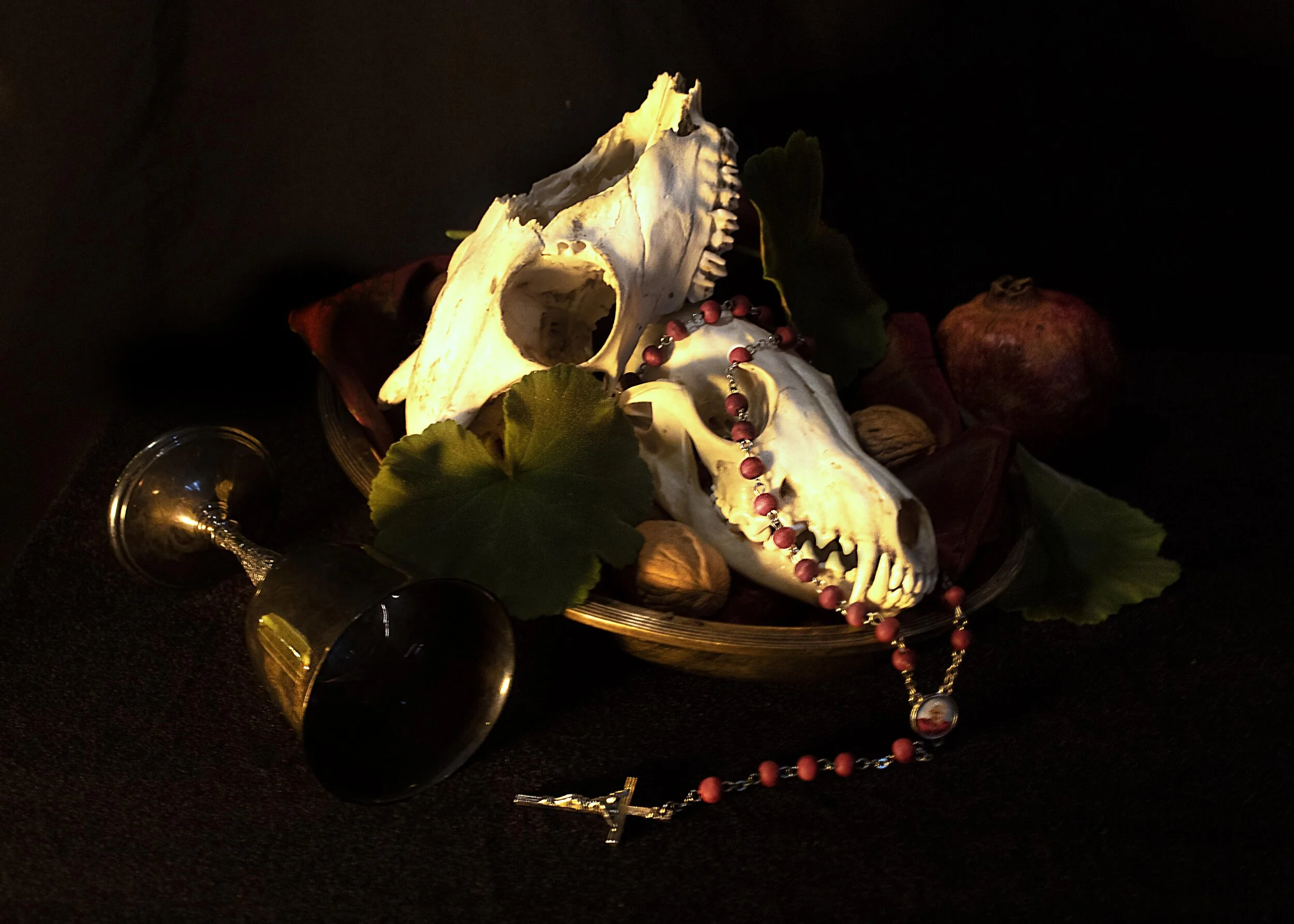
The first scene depicts the cultural genocide that Saint Patrick allegedly caused when he drove the “Snakes” from Ireland. Snakes are a metaphor in this context because Druidic priests of this time period had snake tattoos.
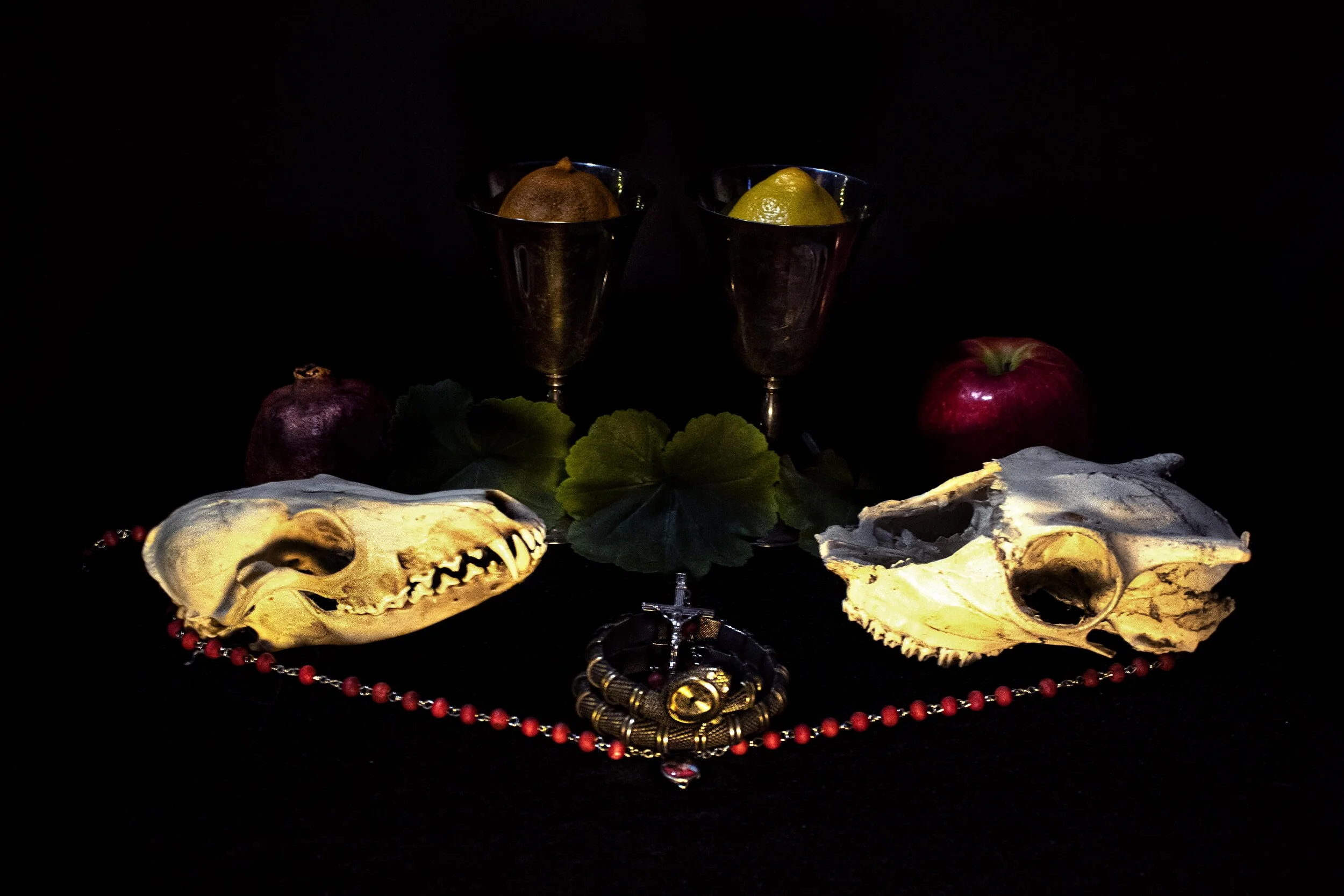
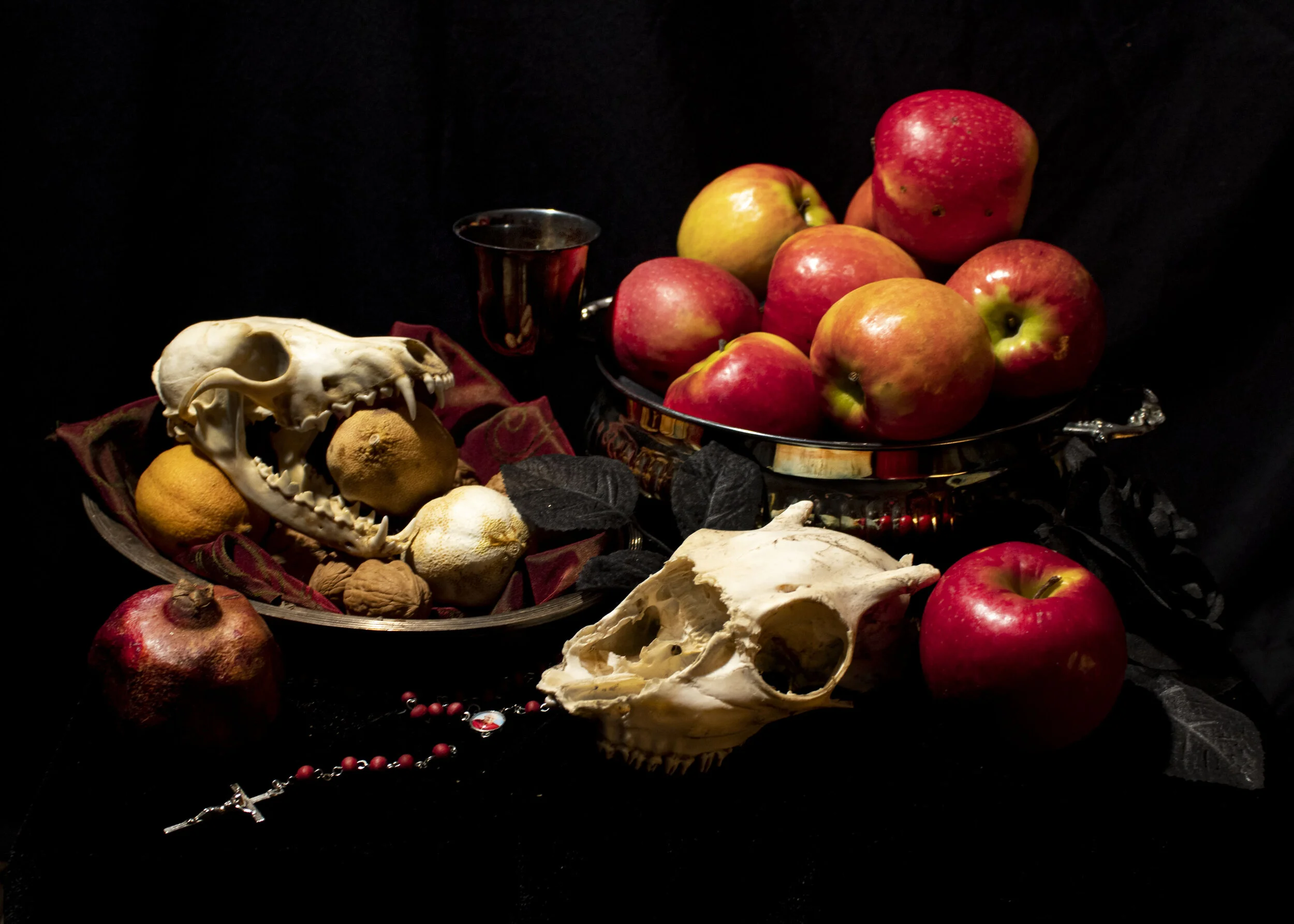
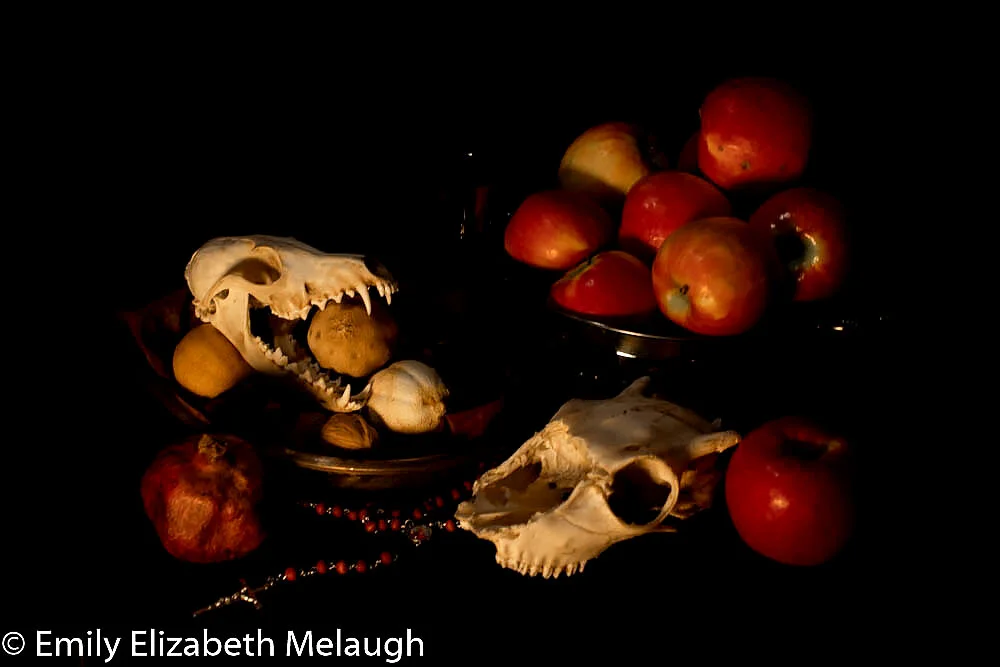
Throughout the series, we have scenes of two skulls and various imagery discussing the relationships between Christian history and pagan history. The Fox skull has an opposable bottom jaw and sharp teeth, standing in for the Druidic pantheon of gods and goddesses. The fox skull is interacting with the Deer skull throughout the series, and gives way to the name of The Hunt, or Le Chasse as I’ve chosen. The deer represents Christ based on the story of Saint Eustace.
Scene 1
Le Chasse: Blood spilled for Christ
Scene 2
Le Chasse: Opposing Ideologies
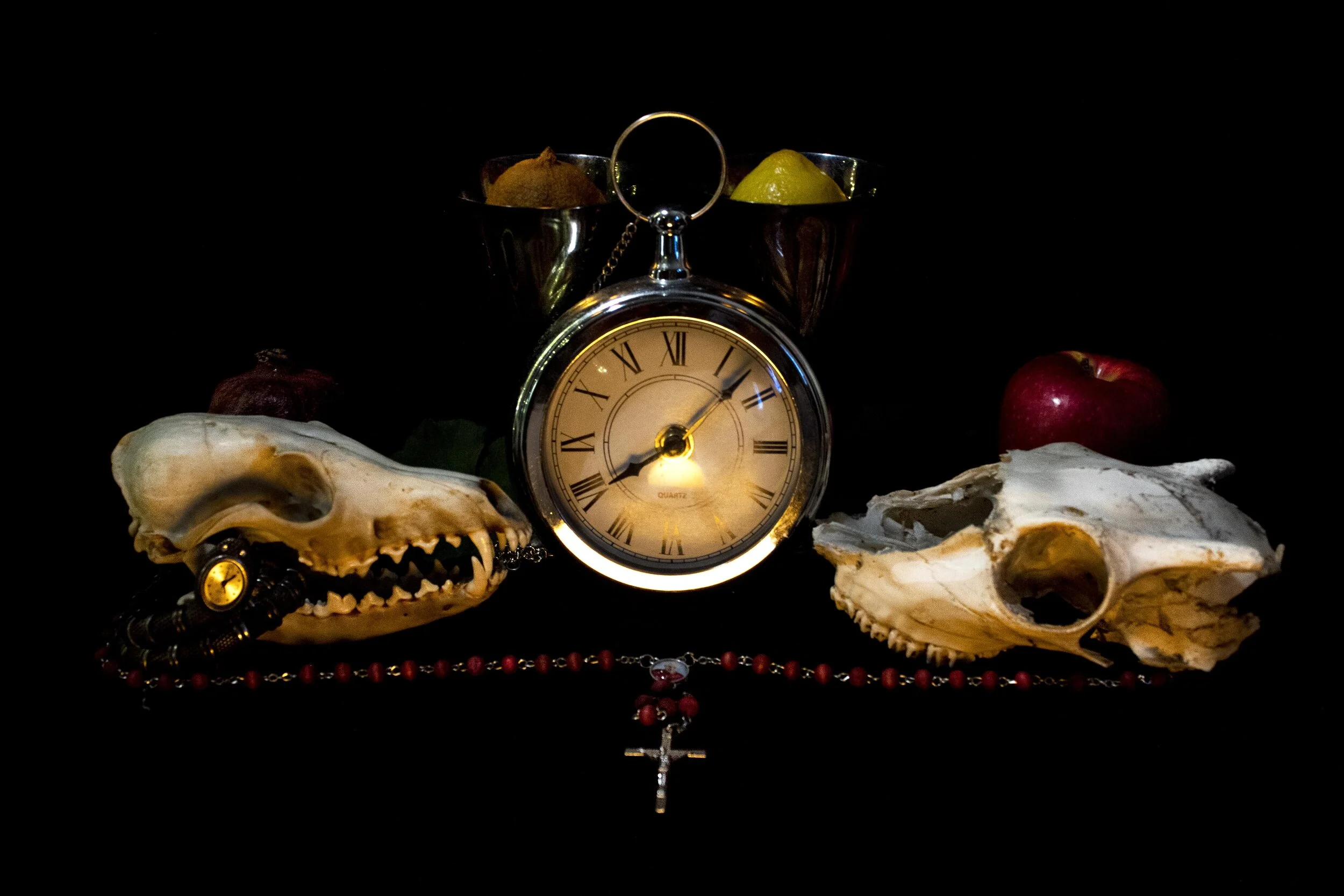
Scene 3
Le Chasse: The Decay of Time
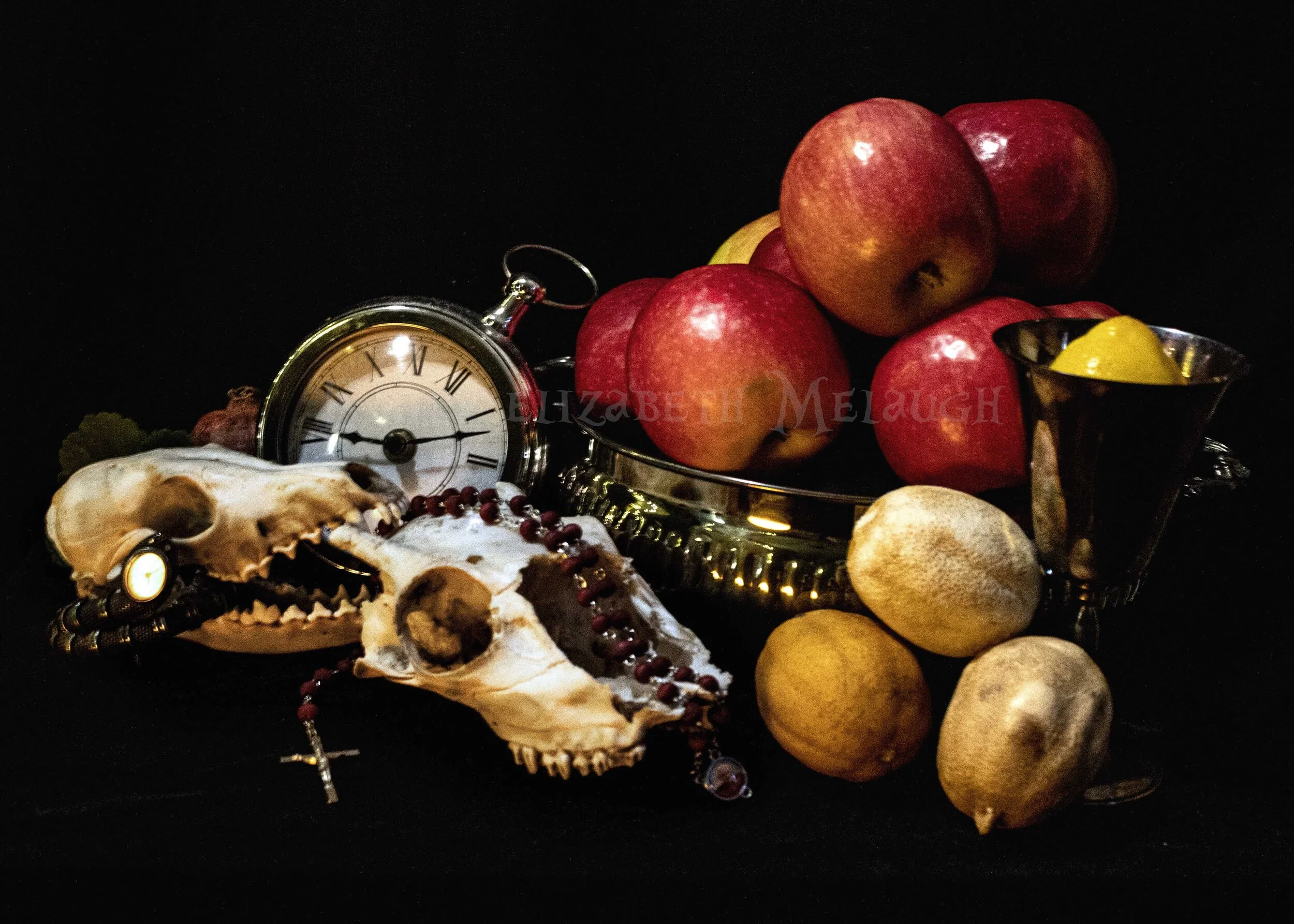
Scene 4
Le Chasse: Radical Religions
Scene 5 - Le Chasse: Harmony
“According to legend, St. Eustace was formerly a pagan Roman general named Placidus, who reveled in the hunt until one day he confronted a magnificent stag through whose deep eyes the Christ light shone. Christ spoke to him through the deer. The general gave up hunting and converted to the new religion. (Moss)”
On the history of Saint Patrick, which visually is represented by the rosary featuring Benedict XVI; he is credited with facilitating the spread of Christianity throughout the Ireland. He began the religious conversion from old pagan theologies and polytheism, to a new set of religious beliefs with Christ at its core. So, what modern pagans, and I, misunderstood, is that this conversion process wasn’t a radical spiritual genocide. This was a gradual process that took hundreds of years. My 2nd and 3rd Scene are what was informed by this part in the history.
There was no eradication of the snakes from Ireland, but rather a soft push towards Christian theologies and ideals. This is represented by the symmetry of the deer and fox skull in the 2nd and 3rd scenes.
The 4th scene takes us to postmodern Christian and pagan belief systems. Since the time of Saint Patrick’s influence, Pagans have not only existed peacefully in Ireland, they have done so side by side with the Christians. Pagans continue to thrive and have a voice in modern rituals and pagan holidays. Frequently, Christian holidays have been adopted from wiccan and pagan celebrations. An example of this being Eostre (pagan holiday to welcome spring) and Easter (the death and resurrection of Christ.) Paganism is an umbrella term for religious movements that pre-date Christianity; this means that term encompasses druidic, Celtic, Hellenist and Egyptian Pantheons to name a few.
The final scene in this series depicts the two skulls, two ideologies, living side by side in harmony. Each religion respecting and acknowledging the others existence, and not encroaching upon one’s belief systems. However, there has been some regression and progress in modern Catholicism. Pope Benedict XVI was an outdated postmodern Christian who held unto old belief systems and was against anything that “wasn’t Christian”. Our Current pope, Pope Francis, is a progressive Christian who believes we should accept and love one another without expectance. My final scene is a nod to the current state of Christian and pagan relationships.
The lighting in this photoshoot is what informs the viewer of a dark and mysterious underlying narrative. I used chiaroscuro lighting techniques in my shoot and a sepia analogous color palette. I heavily researched Christian and pagan symbolism for the objects I would use in my still life. Every single item in each scene is carefully thought out and the composition considered.
There was a hunt, of new age paganism and outdated Christian practices. The fox hunts the deer, as the Christians hunted the pagans. We will not forget their crimes on our kind. And
we will love and accept all creatures of earth. So, Mote it be.